
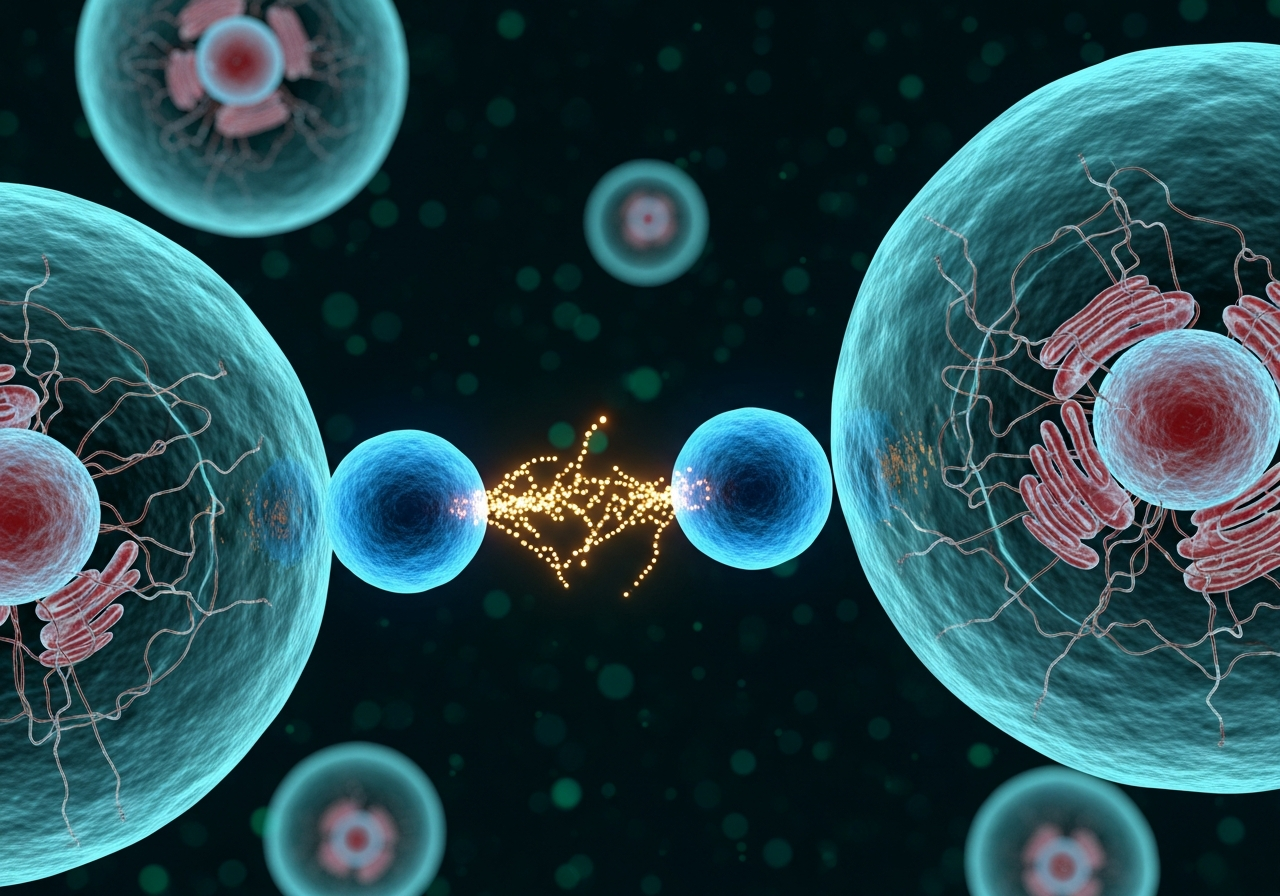
Exosomes represent one of the most exciting frontiers in regenerative medicine and biotechnology research. These nano-sized extracellular vesicles are revolutionizing our understanding of cell-to-cell communication and opening new possibilities for therapeutic applications.
What Are Exosomes?
Exosomes are small membrane-bound vesicles (30-150 nanometers) released by virtually all cell types. They carry a cargo of proteins, lipids, and nucleic acids (including mRNA and microRNA) that can influence the behavior of recipient cells.
Unlike simple signaling molecules, exosomes deliver complex packages of biological information, making them powerful tools for intercellular communication research.
Mechanisms of Action
Exosomes function through several mechanisms:
Cargo Delivery: Transfer of proteins, mRNAs, and microRNAs to target cells
Surface Signaling: Receptor-ligand interactions on exosome and cell surfaces
Membrane Fusion: Direct integration with target cell membranes
Endocytosis: Uptake by target cells through various endocytic pathways
Research Applications
Regenerative Medicine: Studies suggest exosomes may support tissue repair and regeneration, with research focusing on wound healing, cardiac repair, and neural regeneration.
Cancer Research: Exosomes play roles in tumor microenvironment communication, metastasis, and immune evasion, making them important research targets.
Diagnostics: "Liquid biopsy" approaches use exosomal biomarkers for non-invasive disease detection.
Drug Delivery: Engineered exosomes are being investigated as natural nanoparticle delivery systems.
Exosome Sources in Research
Mesenchymal Stem Cell (MSC) Exosomes: Most extensively studied for regenerative applications
Immune Cell Exosomes: Research into immunomodulatory effects
Plant-Derived Exosomes: Emerging area of investigation
Engineered Exosomes: Modified for specific research applications
Current Research Focus
Scientists are investigating:
- Standardization of isolation and characterization methods
- Understanding cargo selection mechanisms
- Optimizing production and storage
- Identifying specific therapeutic applications
Challenges and Considerations
The field faces several challenges:
- Heterogeneity of exosome populations
- Standardization of production methods
- Characterization and quality control
- Regulatory pathway development
Future Directions
Exosome research continues to expand into:
- Personalized medicine approaches
- Combination therapies
- Advanced engineering techniques
- Clinical translation studies
The convergence of nanotechnology, cell biology, and therapeutic development positions exosomes as promising subjects for future biomedical applications.
Related research articles
Research products mentioned
Important Notice: This article is for informational and educational purposes only. All products mentioned are exclusively for scientific research and are not intended for human consumption or therapeutic use.